Kyoto Railway Museum is one of Japan’s major railway museums, with a diverse range of exhibits dedicated to Japan’s rich history of railroad innovation. Massive in scale, the museum opened in 2016 as the expanded and renovated successor to Umekoji Steam Locomotive Museum.
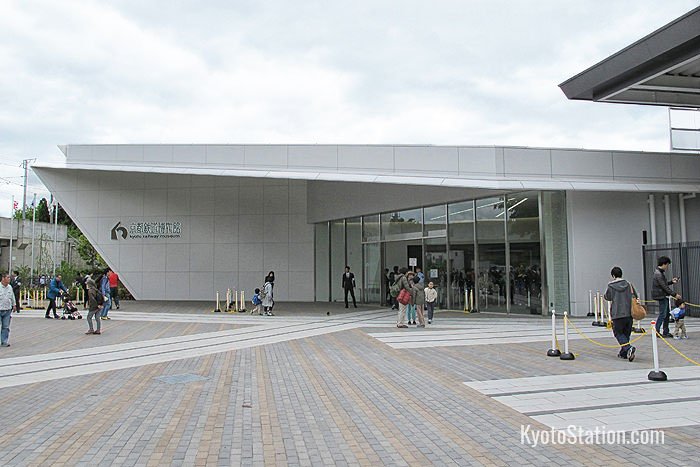
The entrance to the railway museum
Inside the museum you can find 54 railway vehicles, a giant railway diorama, steam locomotive rides, and a train operating simulator. The museum inherited exhibits from Umekoji Steam Locomotive Museum, which occupied the same site, and from the former Modern Transportation Museum in Osaka. In this article we will introduce some of the highlights of this splendid attraction.
The 1st Floor
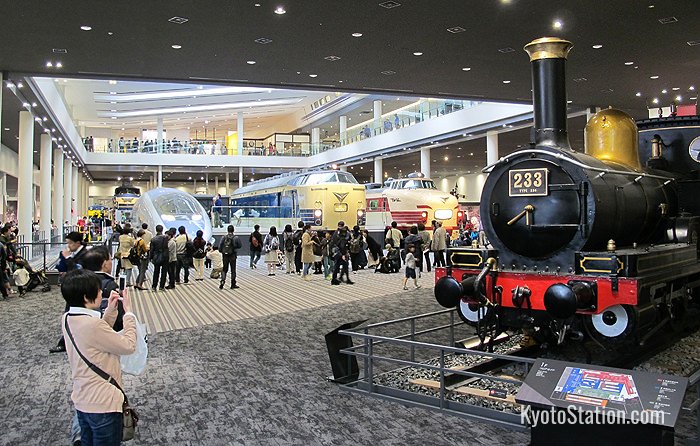
Entering the 1st Floor main display area
From the age of steam to the shinkansen bullet train, the full range of Japan’s railway history is on display in the 1st floor’s main exhibition area. To see so many locomotives and train cars gathered in one place is extraordinary. You could easily spend hours here exploring not only the locomotives, but also the scale models, dioramas and railway paraphernalia on display.
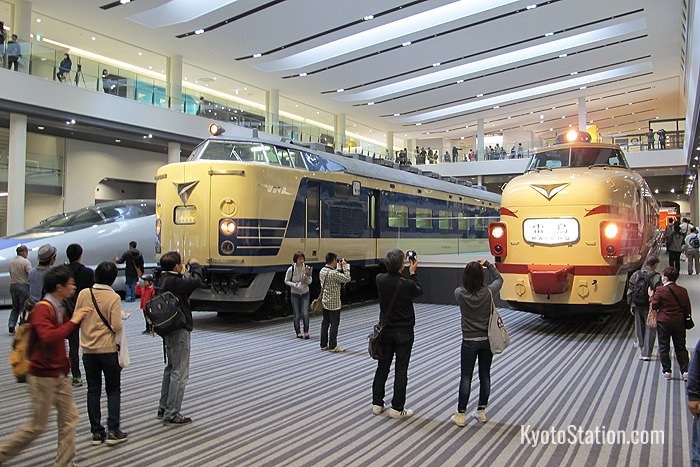
Walking among the exhibits
The early days of steam locomotion are explored, with exhibits and models detailing the development of the steam train in Great Britain, and the eager adoption of this brave new technology in late 19th century Japan.
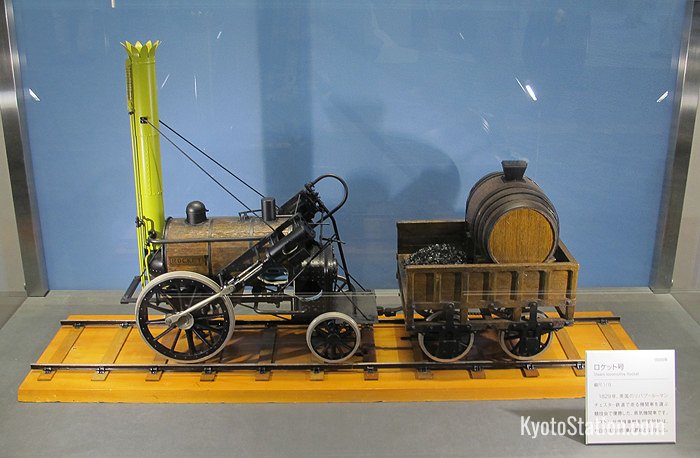
A scale model of George Stephenson’s Rocket – the most innovative train design of 1829. For the next 150 years steam engines worldwide owed their basic design to this early locomotive
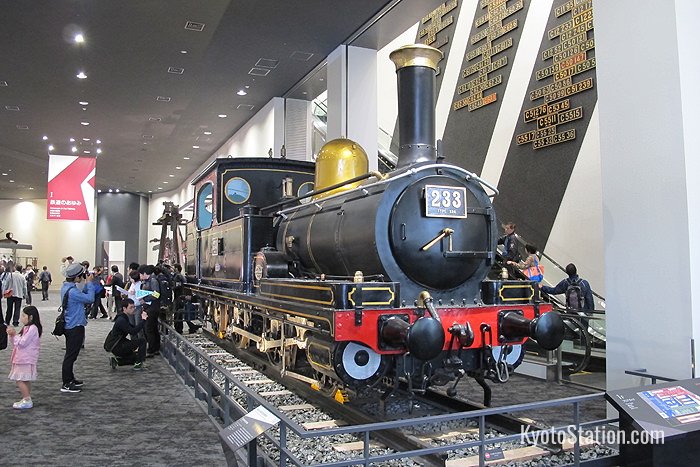
A Class 230 steam locomotive dating from 1903. This is the oldest mass-produced tank engine in Japan
From macro to micro, dotted about among the railway vehicles are countless mini-dioramas depicting notable scenes from Japan’s railway history.
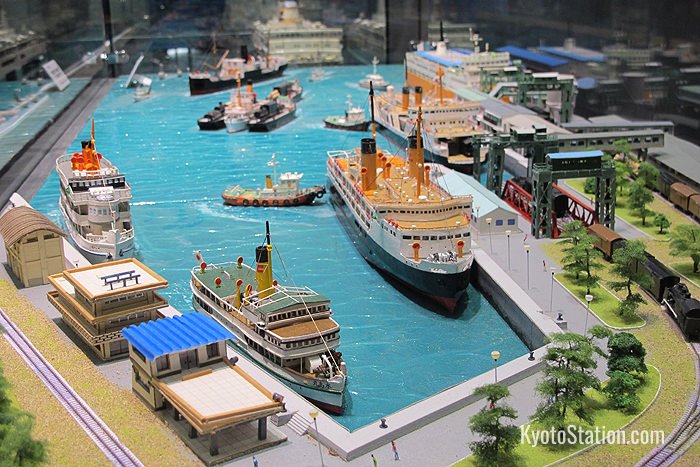
A mini-diorama of railway ferries on Lake Biwa in Shiga Prefecture
Among other notable exhibits on display include the very first shinkansen, the 0 series, which dates from 1964, and the 500 series, which was the fastest train in the world back in 1996.
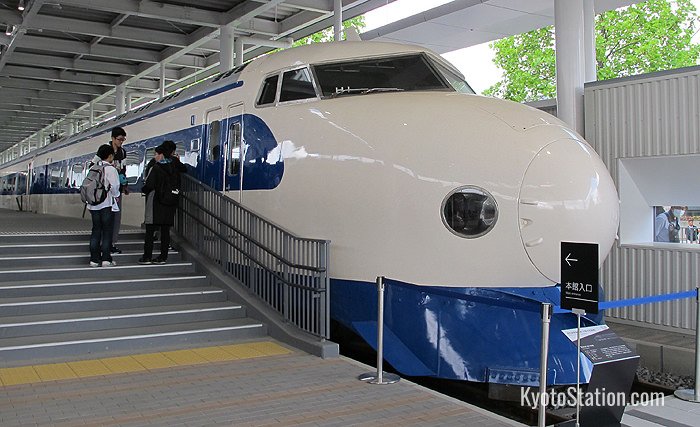
The series 0 shinkansen is on display in the promenade at the entrance to the museum
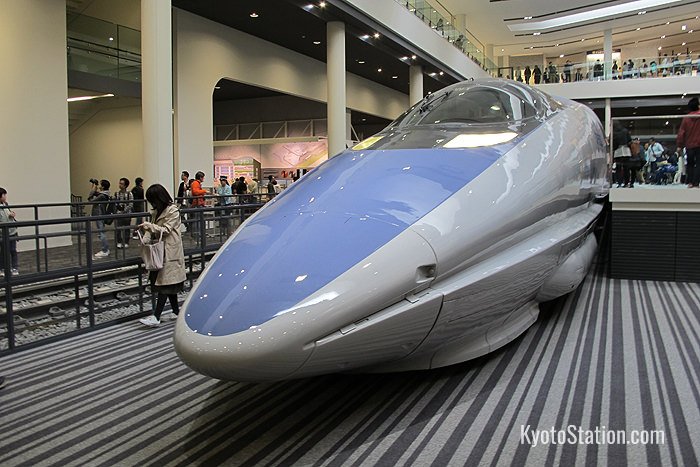
The series 500 shinkansen travelled at 300km per hour
But it’s not all history, and the planners of the museum clearly have a sense of fun. Among the exhibits is a working railroad crossing!
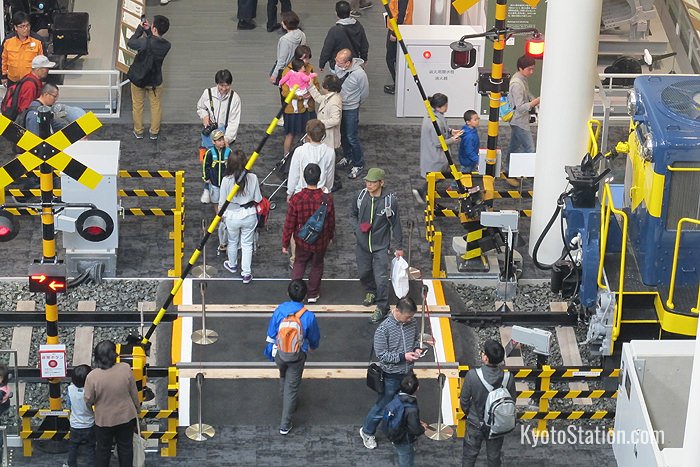
The railroad crossing
True train enthusiasts can even walk underneath some exhibits to explore their inner workings.
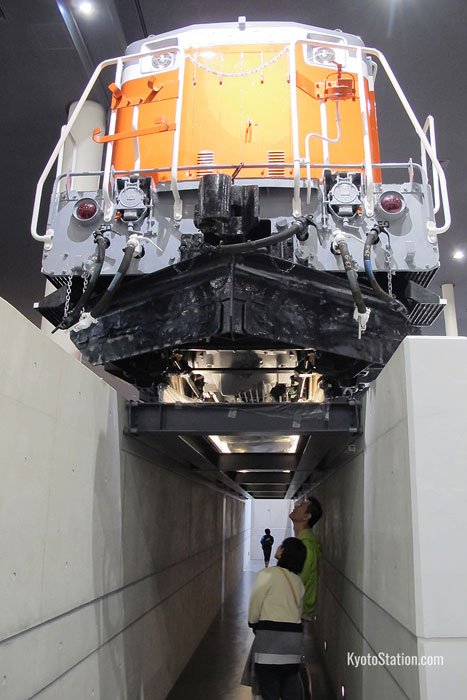
Another angle on one of the exhibits
The 2nd Floor
The second floor has a lot of fun features, not least of which is the viewing gallery from which you can look down at the 1st floor displays.
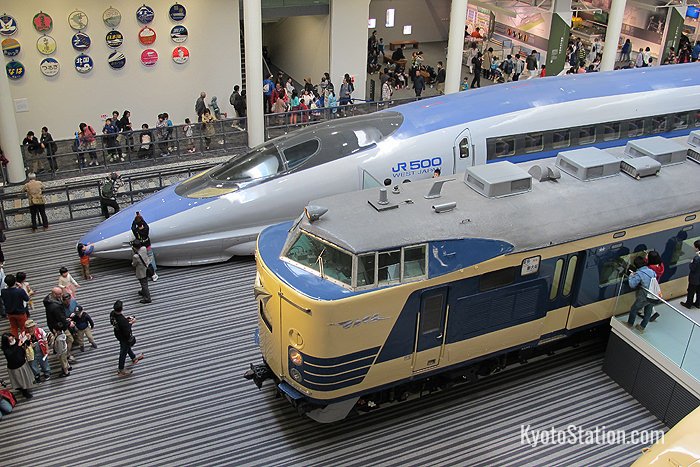
Looking down at the 1st floor
Here you can also enjoy some interactive activities. There is a working model train set where visitors can enjoy controlling the trains as they run around the diorama.
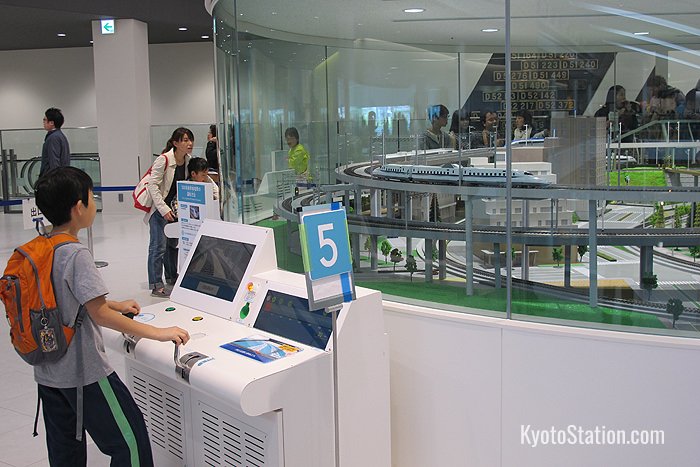
The model train set
There is also a train driving simulator just like the ones that real train drivers use to learn how to drive. Simulator tickets are separate from admission, cost 100 yen for about 10 minutes, and must be purchased in advance; they are not sold inside the museum.
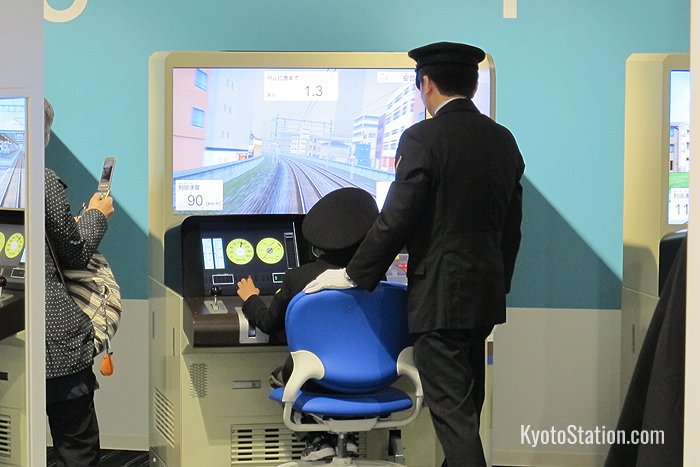
Visitors who practice using the train driving simulator also get to wear a train driver’s cap!
The 3rd Floor
The main highlight of the 3rd floor is the Sky Terrace: a roof top garden and viewing deck from which you can enjoy spectacular views of the nearby JR and shinkansen rail lines.
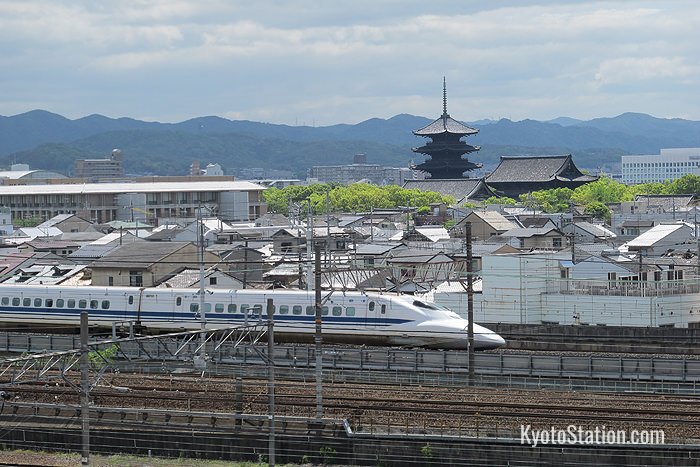
A shinkansen passing Toji Temple viewed from the museum’s Sky Terrace
The Roundhouse Platform
Outside the main building is the massive roundhouse platform. This has 20 tracks surrounding a turntable, and preserves and exhibits 20 steam locomotives dating from the Meiji through Showa periods. Built in 1914, the roundhouse is Japan’s oldest surviving reinforced concrete train depot and is a nationally designated Important Cultural Property.
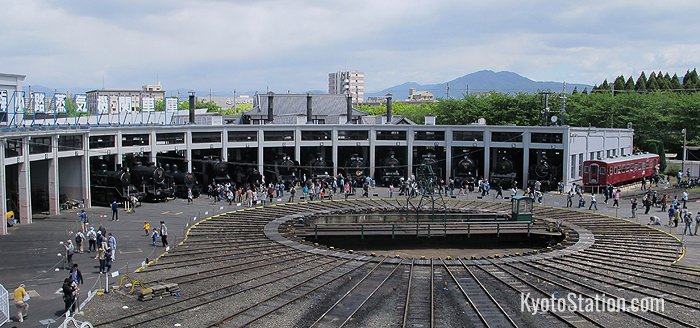
A view over the roundhouse from the 2nd floor of the main building
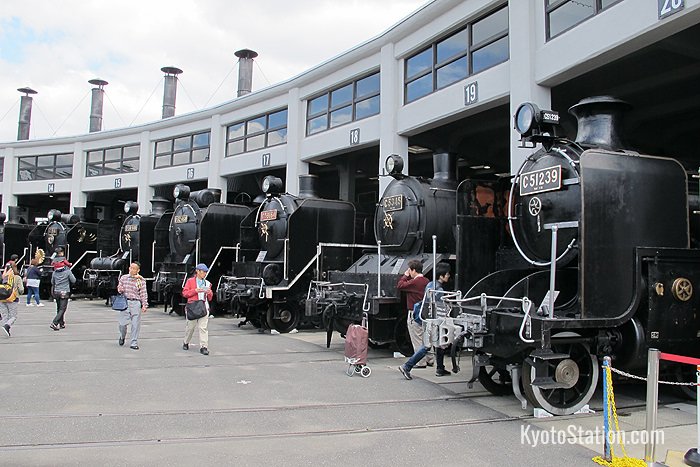
Roundhouse exhibits
Steam Locomotive Rides
Close by the roundhouse is the boarding area for steam train rides. The SL Steam ride makes a short 1-km round trip pulled by a real steam locomotive. Tickets go on sale when the museum opens and can be purchased from ticket machines at the Steam Locomotive platform. The fare is 300 yen for general, university, and high school visitors, or 100 yen for visitors aged 3 through junior high school. It’s a great opportunity to travel back into the golden age of steam, and the haunting sound of the train’s whistle is incredibly evocative.
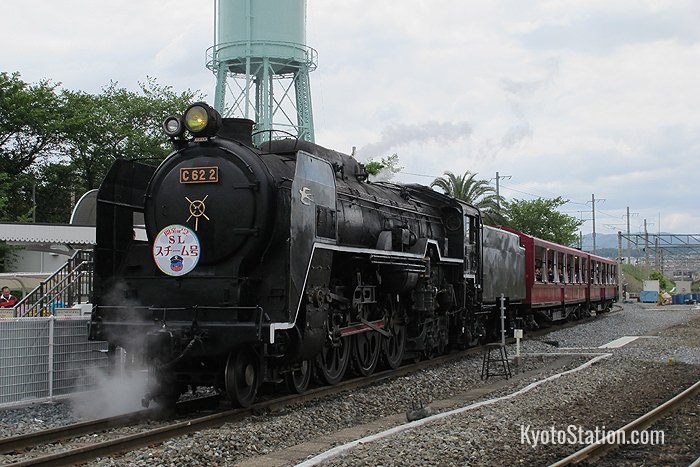
All aboard!
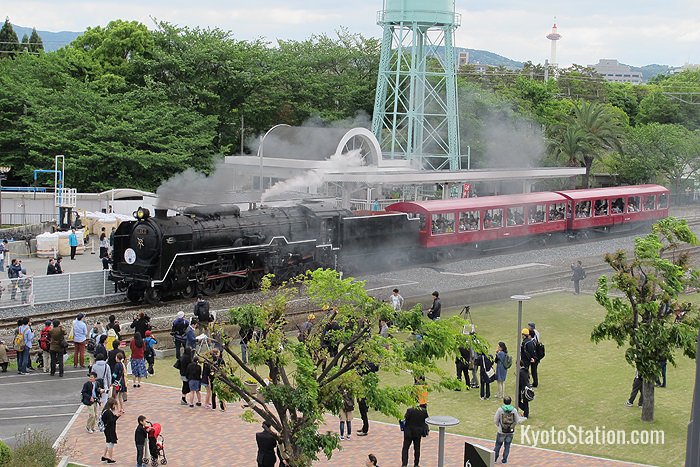
The steam train at Kyoto Railway Museum
Additional Facilities
There is a small eatery in one of the train cars in the 1st Floor promenade, as well as a full scale restaurant on the 2nd Floor. The museum has plentiful seating and break areas inside and outside, some of which are also contained in converted train cars. Railway station style bento box lunches are on sale and can be eaten in these rest areas. For families with small children there is a nursing room with baby changing tables. There are also coin-operated lockers for baggage on the first floor. The museum shop is housed within the former Nijo Station building which also forms the exit of the museum.
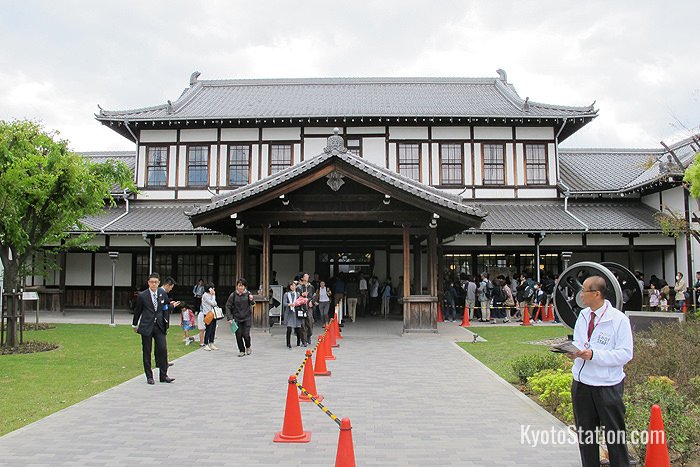
The former Nijo Station building dates from 1904. It was moved to its current location in 1997
Kyoto Railway Museum Location
Kyoto Railway Museum is located west of Kyoto Station at the far end of Umekoji Park. The easiest rail access is to take the JR Sagano Line from Kyoto Station to Umekoji-Kyotonishi Station, from which the museum is about a 2-minute walk. From the north central exit of Kyoto Station it will take about 20 minutes to walk there.
There are also buses from the main bus terminal on the north side of the Kyoto Station building. From Stand B3 in the center of the bus terminal, City Bus 205 or 208 takes about 10 minutes to Umekoji Koen/JR Umekoji-Kyotonishi-eki-mae, followed by a walk of about 3 minutes. City Bus 86 takes about 10 minutes to Umekoji-koen/Kyoto Railway Museum-mae. The museum has no dedicated parking, so public transport is recommended.
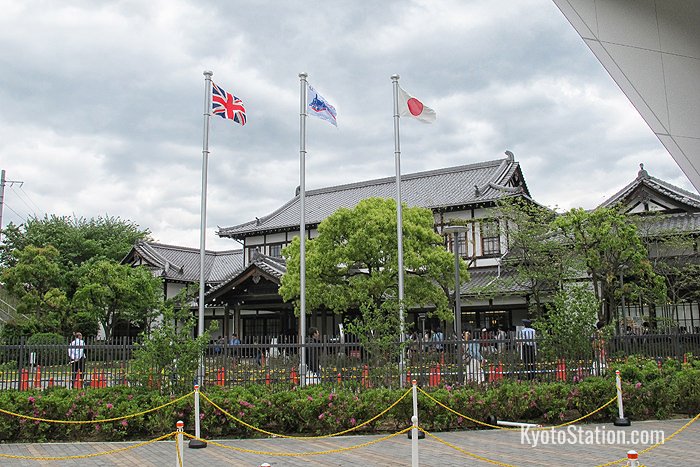
The flags of both Japan and Great Britain fly outside the museum to emphasize the historic development of railway technology in these two countries
Opening Hours:
10:00 – 17:00 (Last entry: 16:30)
The museum is generally closed on Wednesdays and during the New Year holidays (30th December – January 1st). It opens on some holidays and school-vacation periods, so check the official calendar before visiting.
Entry Fees:
General Admission (18 years and older) – 1,500 yen
University and High School Students – 1,300 yen
Junior High and Elementary School Students – 500 yen
Children (3 years and older) – 200 yen
Article and original photos by Michael Lambe. All rights reserved. Last updated 04-Jul-2026.