Keihan Electric Railway is a private company that operates a number of rail lines in the Kyoto, Shiga and Osaka areas. None of these rail lines pass through Kyoto Station, and they are not covered by the Japan Rail Pass. However, they are very convenient when traveling between Kyoto and Osaka, or when traveling between major tourist locations in Kyoto. In this article we will focus on the Keihan Main Line which is the most useful line for visitors to Kyoto.
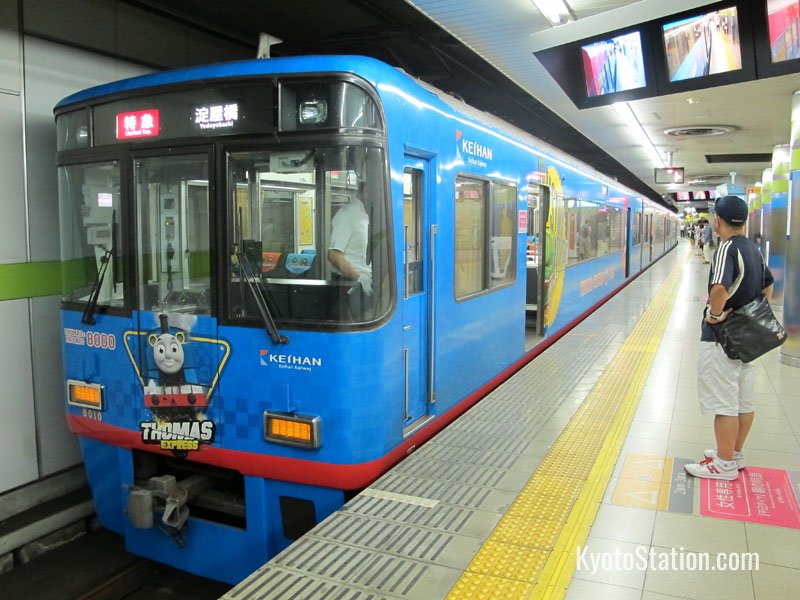
A Limited Express at Demachiyanagi Station
Access
The Keihan Main Line does not connect directly with Kyoto Station. The closest transfer point is Tofukuji Station, which has both JR and Keihan platforms. Kyoto Station is one stop from Tofukuji on the JR Nara Line.
The Keihan Main Line
The Keihan Main Line proper runs between Kyoto’s Sanjo Station and Yodoyabashi Station in Osaka. In the north the Keihan Main Line is extended by the Oto Line from Sanjo Station to Demachiyanagi Station. Effectively the Oto Line and the Keihan Main Line are the same thing.
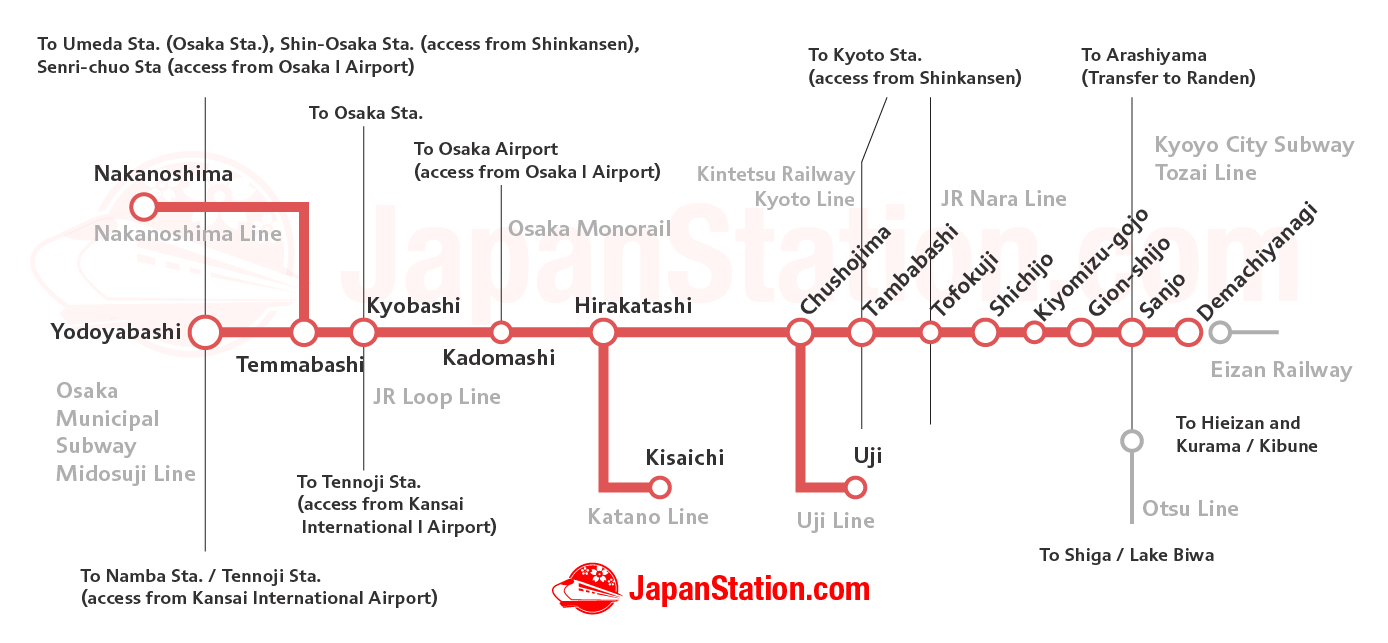
In the south however, the Keihan Main Line is extended by the Nakanoshima Line from Osaka’s Temmabashi Station to Nakanoshima Station. Some trains run all the way from Demachiyanagi through to Yodoyabashi, but others go to Nakanoshima, so you should be careful which train you board when heading to Osaka.
Because the Keihan Main Line runs north to south through the center of Kyoto city, and because its stations are reasonably close to many of Kyoto’s most iconic sightseeing locations, this line is very convenient for getting about Kyoto city. However, it is also a useful line for getting between Kyoto and Osaka. A Limited Express train will get you from Sanjo Station to Yodoyabashi Station in about 50 minutes for 490 yen. If you are more centrally located in Kyoto city, and don’t wish to go to Kyoto Station, then this might be the route you choose to get to Osaka.
To visit Uji via the Keihan Main Line you will need to transfer at Chushojima to the Keihan Uji Line.
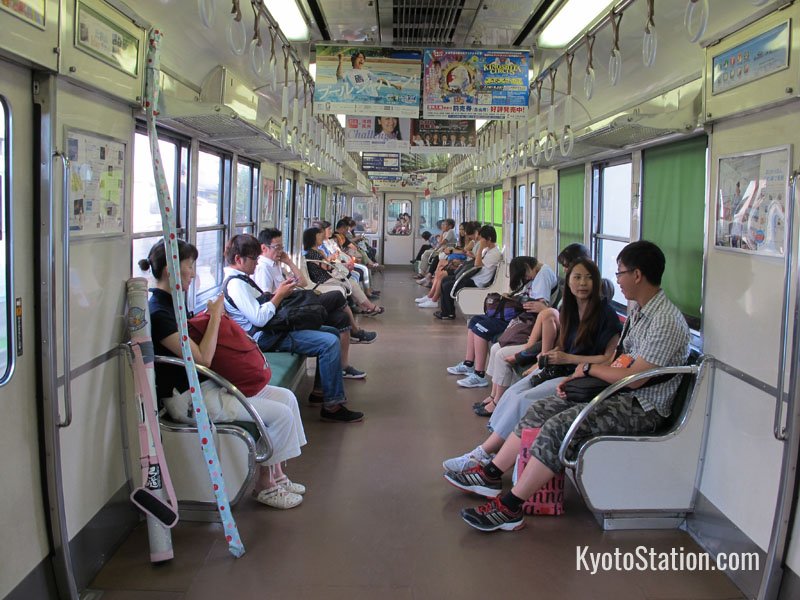
On board a local train on the Keihan Main Line
Key Destinations
There are 42 stations between Demachiyanagi and Yodoyabashi. The following are the stations you are most likely to visit.
Demachiyanagi Station
This station is convenient for visiting the primeval forest of Tadasu-no-Mori and Shimogamo Shrine – a designated UNESCO World Heritage Site. You can also use this station to transfer to the Eizan Electric Railway which connects with the scenic villages of Kibune, Kurama, and to Yase Hieizanguchi Station at the base of Mount Hiei.
Jingu-Marutamachi Station
This station on Marutamachi Street, lies between Kyoto Imperial Palace Park in the west and Kurodani Temple in the east. Visitors to Kyoto Handicraft Center should also get off here and walk ten minutes east.
Sanjo Station
Head east from this station and you can access the northern part of the Gion entertainment district and Heian Jingu Shrine. To the west, across Sanjo Bridge, you have immediate access to the Sanjo and Kawaramachi shopping districts, and the northern end of the historic alley of Pontocho. You can also transfer here to the Subway Tozai Line.
Gion-Shijo Station
This station gives access to the southern end of the historic alley of Pontocho, to the Gion entertainment district, and to Yasaka Shrine. Kyoto-Kawaramachi Station on the Hankyu Kyoto Line is also easily accessed on the west side of Shijo Bridge. Sanjo and Gion-Shijo are the Keihan Main Line’s most central stations in Kyoto.
Kiyomizu-Gojo Station
Despite the name, this station is actually quite a long walk from the beautiful temple of Kiyomizu-dera. On foot it will take you about 20-25 minutes. However, there are plenty of interesting pottery shops along the way.
Shichijo Station
This station is convenient for Kyoto National Museum and Sanjusangendo Temple which is famous for having 1000 statues of the Buddhist goddess of mercy. You can also walk to Kyoto Station from this station in about 10-15 minutes.
Keihan Tofukuji Station
Tofukuji Temple is an expansive Buddhist temple complex 10 minutes walk from Keihan Tofukuji Station. It is famous for its gardens, in particular its moss garden, and for maple leaf viewing in the autumn. You can also transfer here to the JR Nara Line at JR Tofukuji Station.
Fushimi-Inari Station
Fushimi-Inari Station is a short walk from Fushimi Inari Taisha Shrine. This Shinto shrine is Kyoto’s most popular tourist destination. It is famous for its fox statues and for the trail up Inari Mountain which is lined with thousands of vermilion torii gates. JR Inari Station on the JR Nara Line also serves this area.
Tambabashi
Many people change here between Limited Express and Local trains. You can also transfer here to the Kintetsu Kyoto Line.
Chushojima Station
At Chushojima you can transfer between the Keihan Main Line and Keihan Uji Line. This station also gives access to the sake breweries and canals of the southern Fushimi area. Local attractions include the Gekkeikan Okura Sake Museum and the Teradaya Inn, a museum dedicated to the 19th century samurai Ryoma Sakamoto.
Yodo Station
This station is a five minute walk from Kyoto Racecourse, “the premier racecourse of Western Japan”.
Hirakata Koen Station
This station is a three minute walk from Hirakata Park, a popular location for families with children. “Hirapa” as it is affectionately known, dates from 1910 and is Japan’s oldest amusement park. It is especially popular in the summer for its pool, and in the winter for its ice rink.
Keihan Kyobashi Station
Kyobashi itself is a large commercial and entertainment district in Osaka city, packed with bars and restaurants. There are actually three stations here, so it is an important transfer point between the Keihan Main Line and several lines run by JR West (the Osaka Loop Line, the JR Tozai Line, the Katamachi Line) and by Osaka Metro (the Nagahori Tsurumi-ryokuchi Line). Within Keihan Kyobashi Station this is a transfer point between trains bound for Yodoyabashi or Nakanoshima.
Temmabashi Station
This is the last transfer point between the Keihan Main Line and the Nakanoshima Line.
Yodoyabashi Station
Yodoyabashi is the closest station to Osaka City Hall. Here you can transfer to the Osaka Metro Midosuji Line which connects to Osaka’s major commercial and entertainment districts of Umeda and Namba.
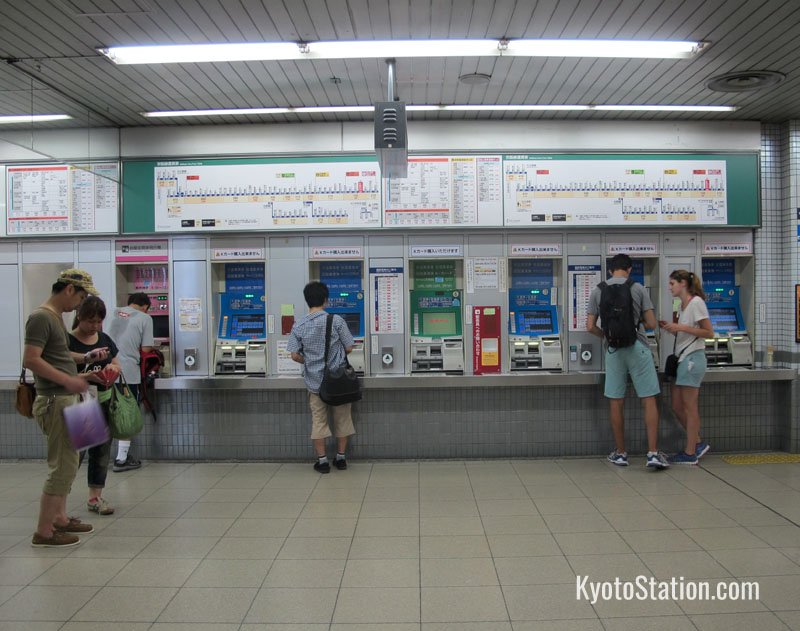
Ticket Machines at Gion-Shijo Station
Discount Tickets & Pass Cards
As Keihan Electric Railway is operated by a private company it is not covered by the Japan Rail Pass. For short-term visitors, Keihan offers several sightseeing passes for Kyoto and Osaka. Options include Kyoto or Kyoto-Osaka passes for one day or 24 hours, a Kyoto-Osaka pass that also covers Osaka Metro, and themed versions for the Kurama/Kibune area and Hirakata Park. These passes include special benefits at participating locations. Visit the official Keihan Railway website to check the latest pass names, coverage and validity periods before buying.
For wider private-rail and metro travel across Kansai, check the official KANSAI RAILWAY PASS website before you travel. The pass has been sold in 2-day and 3-day versions for overseas sightseeing visitors and does not cover JR trains or buses. Local residents may also use PiTaPa, an IC fare card accepted across many private railways, buses and subway systems in the Kansai Region.
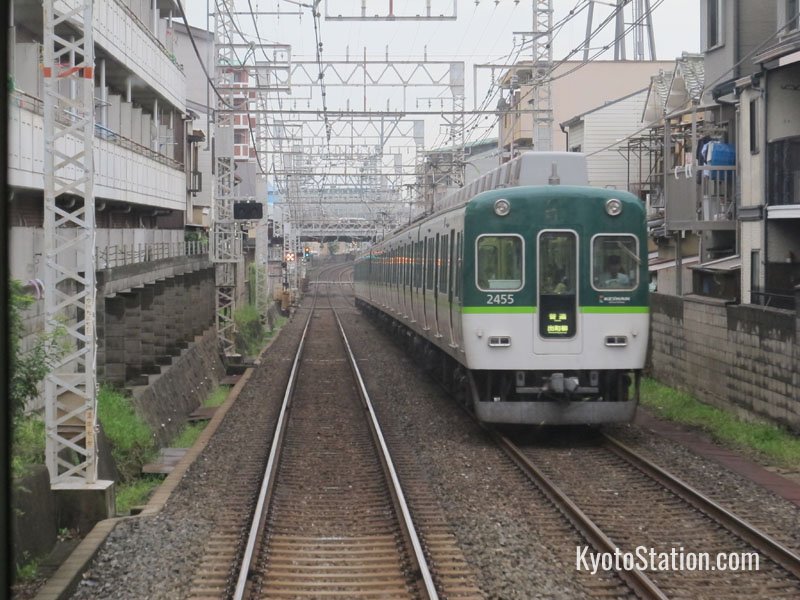
Heading South on Keihan Main Line
Keihan Main Line Trains
The Keihan Main Line is served by a bewildering variety of train types. The main ones are: Limited Express, Rapid Express, Express, Sub-express, Semi-express and Local. You should be careful to get on the right train for your stop. If you are heading to Osaka, a Local train would obviously take too long. Traveling within Kyoto however, the faster trains might skip your station. The official Keihan Railway website has a guide to train types, but to find a suitable train quickly and easily it is best to use an English language online route finder like Jorudan or Navitime.
You can find timetables, and station maps for the Keihan Main Line here. The official Keihan Railway website also has a free downloadable route map of all the Keihan lines and stations here.
Article and original photos by Michael Lambe. All rights reserved. Last updated 15-Jun-2026.