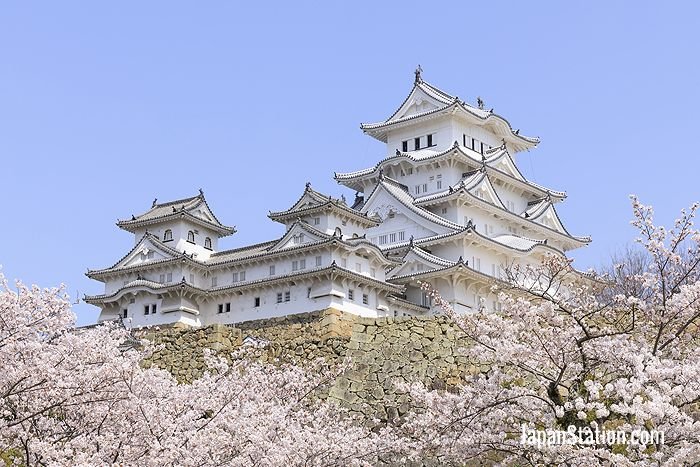
Himeji’s top attraction is Himeji Castle, one of only 12 original medieval Japanese castles to survive into the modern era and one of Japan’s first UNESCO World Heritage sites. The castle is a registered National Treasure and is famous for its brilliant white exterior, but it is not the only reason to visit. Himeji also has gardens, temples, museums and family attractions that can turn a simple day trip into a fuller city visit.
From Kyoto, the easiest way to reach Himeji is by train: the shinkansen is fastest, while JR Special Rapid services are cheaper and still direct.
Himeji Castle
The Main Attractions
Himeji Castle
A wooden fort was first built on this site in 1333, and a castle replaced it in 1346. The castle was remodeled, expanded and rebuilt many times before taking its present form as one of Japan’s largest and most celebrated original castles. It survived the bombing raids of World War II, when much of the surrounding city was damaged, and a major restoration completed in 2015 returned the rooftops to their dazzling white appearance. Because of this elegant white profile, Himeji Castle is also known as Shirasagi-jo, or “White Heron Castle.”
Himeji Castle is open from 9:00 to 17:00, with the castle buildings beginning to close down from 16:30. Opening times may vary for seasonal events, and the castle is closed on December 29 and 30. Current general admission for visitors aged 18 and over is 2,500 yen, while visitors under 18 enter free. A combined Himeji Castle and Koko-en ticket costs 2,600 yen for adults.
Allow 1.5 to 2 hours for the castle itself. During cherry blossom season, Golden Week, Obon and other busy periods, entry to the main keep can involve a wait. You can walk to the castle from Himeji Station in about 20 minutes, or take a Shinki Bus from the station area to Otemon-mae and walk from there.
Koko-en Garden
Koko-en Garden
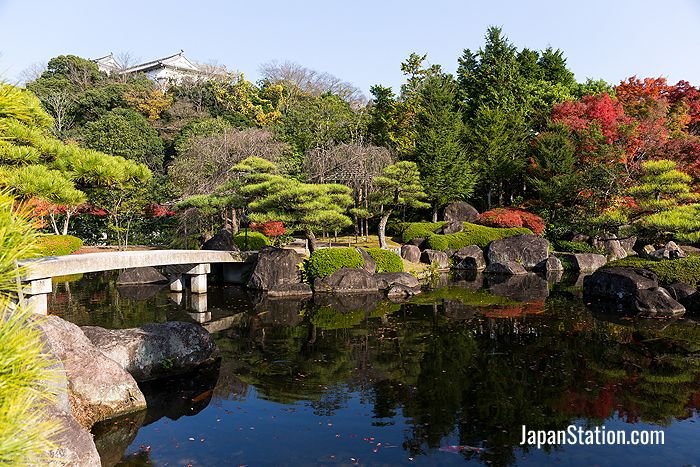
Koko-en is a group of nine Edo-style strolling gardens just southwest of Himeji Castle. Opened in 1992 on the site of former samurai residences, the gardens use earthen walls, gates, ponds and carefully arranged planting to suggest the old castle-town layout. It is an easy addition to a castle visit, especially if you want a quieter stop after the main keep.
Koko-en is open from 9:00 to 17:00, with last entry 30 minutes before closing, and is closed on December 29 and 30. Admission is 400 yen for adults aged 18 and over, and free for visitors under 18. If you plan to visit both the castle and Koko-en, buy the combined ticket for 2,600 yen. Koko-en is about 15 minutes on foot from Himeji Station and about 5 minutes on foot from Himeji Castle.
Shoshazan Engyoji Temple
Engyoji is a large Tendai temple complex on Mount Shosha in the northwest of Himeji. Founded in 966 by the monk Shoku Shonin, it is a major pilgrimage site with a very different atmosphere from the castle area. Walking around the temple buildings and forested precincts can easily take two hours, and the site is also known for meditation and sutra-copying activities.
Shoshazan Ropeway
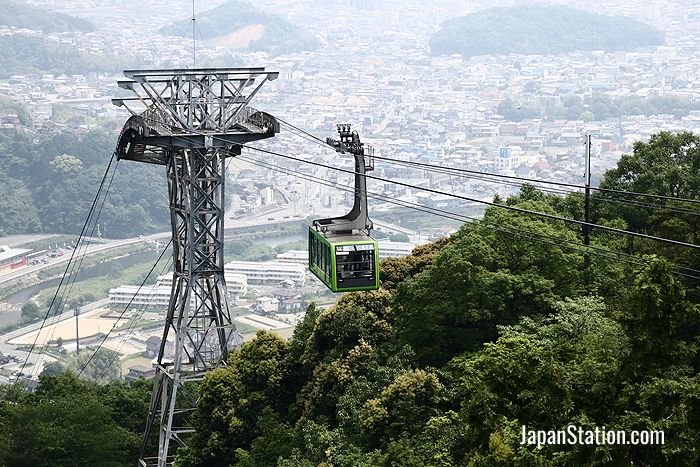
The usual route to Engyoji is by bus and ropeway. From Himeji Station, take a bus toward the Shoshazan Ropeway. A Shoshazan Ropeway ticket set covers round-trip bus travel between Himeji Station or Himeji Castle and the ropeway, plus the round-trip ropeway fare. Current prices are 1,700 yen for adults and 850 yen for children, and tickets are sold at the Shinki Bus Himeji Station Information Center in Q-WELL Himeji. The bus ride takes about 30 minutes, and the ropeway takes about 5 minutes. The set ticket covers transport, so check current temple admission and mountain shuttle details before you go.
Hyogo Prefectural Museum of History is housed in a building designed by the architect Kenzo Tange, about 10 minutes on foot north of Himeji Castle. The museum covers the history of Hyogo Prefecture, Himeji Castle, local festivals, children’s culture and Japanese castles, with hands-on areas and permanent exhibition rooms. It is usually open from 10:00 to 17:00, with last admission at 16:30, but check the museum calendar for closed days before visiting.
Himeji City Museum of Art is the red-brick museum east of Himeji Castle. It is normally known for local art and works by European artists, but the museum building is currently closed for major renovation work, with reopening tentatively expected around the end of December 2027. The surrounding garden remains open during daytime hours, so the building can still be seen from outside.
Himeji City Museum of Literature focuses on local writers and is also worth a look for its architecture, a concrete-and-glass design by Tadao Ando. English display information is limited, so it is best suited to travelers with a strong interest in literature or architecture. The museum is open from 10:00 to 17:00, with last entry at 16:30. It is closed on Mondays, the day after national holidays except Saturdays and Sundays, and from December 25 to January 5. Admission to the regular exhibition is 450 yen for adults, and free for visitors under 18.
Tegarayama Central Park, south of Himeji Station, is a spread-out park area with facilities such as a botanical garden, an aquarium and Himeji City Peace Museum. Check individual facility opening days before making a special trip, as the attractions in this area do not all share the same schedule.
Himeji Central Park is outside the central city and combines a safari park with an amusement park. Facilities include drive-through safari, walking safari, rides, a summer pool and winter ice skating. Recheck admission packages and transport options for your travel date before going, as this is a separate excursion from the castle area.
How to Get There
Himeji can be reached from Kyoto by shinkansen, by regular JR trains, or by car. For most visitors, rail is the simplest choice. The shinkansen is the fastest and most comfortable option, especially if you have a Japan Rail Pass, while the JR Special Rapid Service is a cheaper direct route. Private railway routes between Kyoto and Himeji are possible in theory, but they are too long and complicated to be useful for most travelers.
There is no practical direct bus option from Kyoto to Himeji for most visitors. A route via Osaka would usually take longer than the train and may not save money. To compare train times and fares, use the online JR West Timetable & Route Finder.
Traveling by Shinkansen
The fastest way to travel from Kyoto to Himeji is by shinkansen. Westbound shinkansen services connect Kyoto with Himeji via the Tokaido and Sanyo shinkansen lines. Some direct services from Kyoto Station reach Himeji Station in about 44 minutes, while other direct services take around 56 minutes. If there is no direct departure at a useful time, you can transfer at Shin-Osaka Station or Shin-Kobe Station and still make the trip in roughly an hour.
At the time of this update, a JR West route-finder sample showed an ordinary non-reserved shinkansen trip from Kyoto to Himeji at 4,740 yen, made up of a 2,210 yen basic fare and a 2,530 yen limited express surcharge. Reserved-seat fares cost more and vary by train, seat type, season and sales channel, so check the fare when booking or buying your ticket.
Japan Rail Pass holders can use pass-covered services such as Hikari, Kodama and Sakura trains, depending on the route and transfer. Nozomi and Mizuho trains are not covered by the pass alone, but pass holders can ride them by purchasing the special Nozomi/Mizuho supplement ticket before boarding.
Traveling by Special Rapid Service
If you do not mind a longer journey, the Special Rapid Service is the best budget route from Kyoto to Himeji. Westbound Special Rapid trains on the JR Kyoto Line continue through Osaka and Kobe toward Himeji. A current JR West route-finder sample showed a direct Kyoto-Himeji Special Rapid trip taking 95 minutes for a fare of 2,210 yen.
These trains are regular and require no reservation, but they are commuter services and can be crowded. If you board at Kyoto during a busy period, you may have to stand for the first part of the journey. Seats often open up after major stops such as Shin-Osaka and Osaka.
Traveling by Car
Driving from Kyoto to Himeji is possible via expressways, but journey time and tolls vary by route, traffic and ETC conditions. For most visitors starting near Kyoto Station, the train is simpler and easier to plan. If you do choose to drive, check a current route and toll planner before leaving. For rental information around Kyoto Station, see our article Car Rental in Kyoto.
Getting Around Himeji
Before leaving Himeji Station, it is worth stopping at Himeji City Tourist Information Center in the station’s central concourse. The center provides maps, tourist information and English-speaking staff. For bicycles, use current paid rental options such as Hime-chari or JR West’s Eki-Rin-kun rental office near the station.
For the castle area, the sightseeing Himeji Castle Loop Bus is convenient. It departs from platform No. 6 at Himeji Station and links the station with Himeji Castle Otemon Gate, Himeji City Museum of Art, Hyogo Prefectural Museum of History, Shimizu Bridge, Koko-en and Otemae-dori. The bus runs daily from March to November and on Saturdays, Sundays and national holidays from December to February, with possible suspensions around the New Year period.
A single ride on the Loop Bus costs 210 yen for adults and 110 yen for children. A one-day pass costs 600 yen for adults and 300 yen for children. For current local transport information, check the official Visit Himeji travel pages before setting out.
Article by Michael Lambe. Photos by shiii/PIXTA (1), leungchopan/PIXTA (2), haku-haku/PIXTA (3). All rights reserved. Last updated 08-Jul-2026.