The Hankyu Kyoto Main Line runs between Kyoto-kawaramachi Station in Kyoto and Osaka-umeda Station in Osaka. It is run by the private Hankyu Railway company and so is not covered by the Japan Rail Pass. However, it is a useful rail line when traveling east – west through Kyoto city, or traveling from Kyoto city center to Osaka. It is also possible to use this line to visit Arashiyama, if you transfer to the branch line at Katsura Station.
To visit Kobe, you would change to the Hankyu Kobe Main Line at Juso Station and get off at Kobe-sannomiya Station.
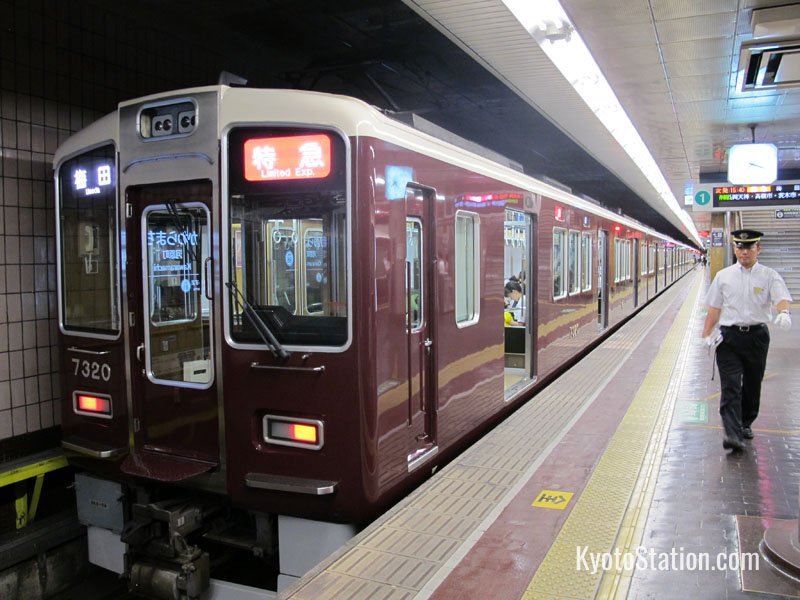
A Limited Express on the Hankyu Kyoto Main Line bound for Osaka-umeda
Access
The Hankyu Kyoto Main Line does not connect directly with Kyoto Station. The easiest way to reach it from Kyoto Station is to take the Karasuma Subway to Shijo Station and then transfer to Hankyu Karasuma Station.
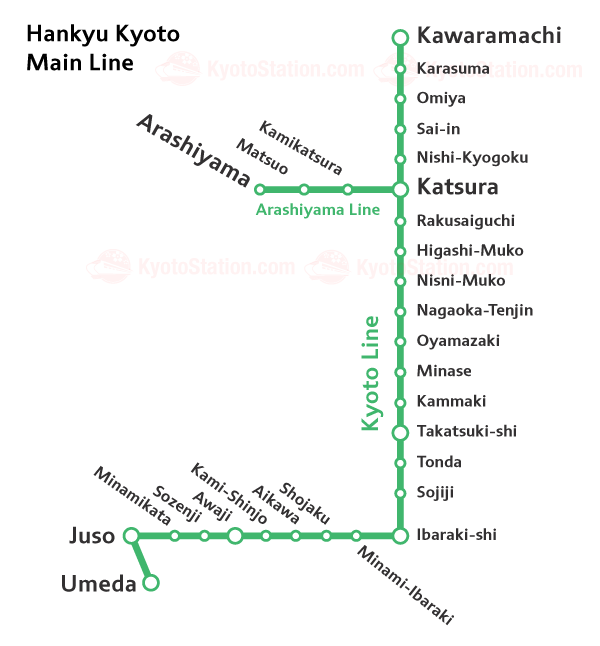
Key Destinations
Kyoto-kawaramachi Station
This station is very convenient for central Kyoto and gives access to the Shijo and Kawaramachi shopping districts. It also has direct underground access to Takashimaya Kyoto Store and the surrounding Shijo-Kawaramachi shopping area. Gion-Shijo Station on the Keihan Main Line is located about 5 minutes away on foot across the Kamo River.
Karasuma Station
This station is convenient for the financial district around Shijo and Karasuma. Daimaru department store is within easy walking distance. It also has direct underground access to the Karasuma Subway Line at Shijo Station.
Omiya Station
At Omiya Station you can transfer to Shijo-Omiya Station and the Keifuku Randen tramline. This line connects to Keifuku Arashiyama Station and is one of three possible routes to the Arashiyama area. See below for further details.
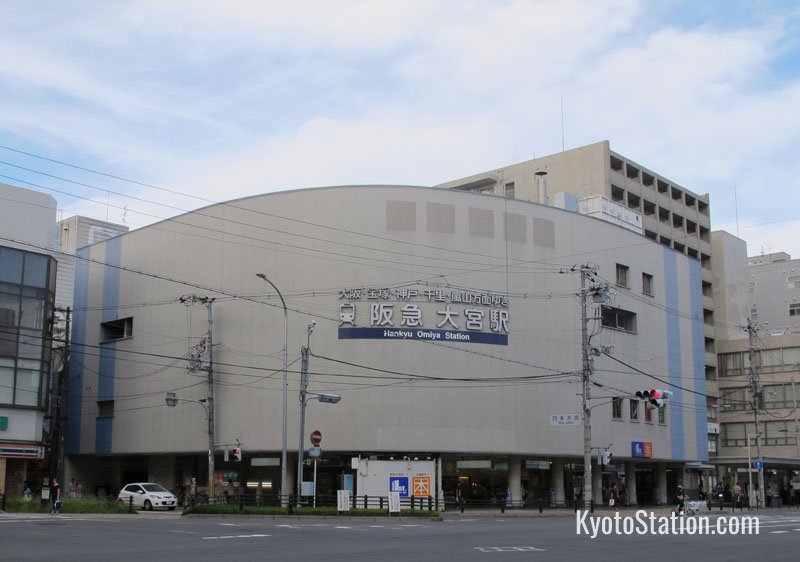
Hankyu Omiya Station
Saiin Station
The lively area around Saiin Station is packed with shops, restaurants and bars. You can also use this as a transfer point to the Keifuku Randen tramline at nearby Sai Station. In addition, City Bus 205 departs from here for Kinkakuji (The Golden Temple). The bus takes 16 minutes and costs 230 yen.
Katsura Station
Change here for the Hankyu branch line that goes to Arashiyama. This is also a convenient stop for the gardens and palace buildings of Katsura Imperial Villa, and for students commuting to the Katsura Campus of Kyoto University.
Katsura Imperial Villa is about 15 minutes away on foot. Buses also run from the east side of the station, but check city bus and Keihan Kyoto Kotsu timetables and fares before travel. Visits to Katsura Imperial Villa must be booked in advance with the Imperial Household Agency.
To go to the Katsura Campus of Kyoto University, take Kyoto City Bus West No. 6 or Keihan Kyoto Kotsu Bus No. 20 or 20B from the west exit of this station toward Katsurazaka-chuo. The ride takes about 12 minutes, with stops for the campus clusters listed on Kyoto University’s official access page.
Hankyu Arashiyama Station (on the Hankyu Arashiyama Line)
This station gives access to the scenic Arashiyama and Sagano area, one of the major tourist attractions in Kyoto. Famous sites in this area include, the Togetsukyo Bridge, Tenryuji Temple, the Arashiyama Monkey Park and the famous bamboo forest. Rickshaw rides and boating on the river are also popular activities.
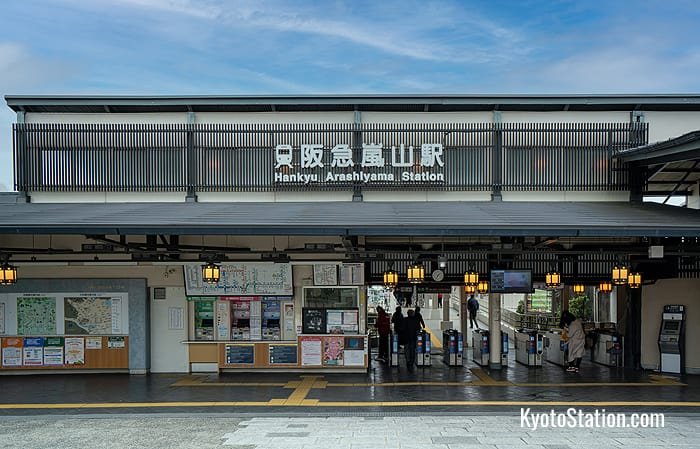
Hankyu Arashiyama Station
Juso
Change here to the Hankyu Kobe Main Line if you want to go to Kobe-sannomiya Station.
Osaka-umeda
Osaka-umeda Station gives access to Osaka’s most popular shopping district, Umeda. Here you can find the Hankyu, Daimaru and Hanshin department stores, along with major shopping complexes such as LUCUA Osaka and Grand Front Osaka. Other popular attractions and shopping areas in Umeda include the Umeda Sky Building and HEP Five. Osaka-umeda station is also a major transportation hub.

Hankyu Osaka-umeda station
Here you can transfer to the Hanshin Line, Osaka Metro Midosuji Line and other Hankyu lines. This station also connects with the wider Umeda station area, including JR Osaka Station, Higashi-Umeda Station, Nishi-Umeda Station and Kitashinchi Station. JR Osaka Station is the main JR hub, with the JR Kyoto Line, Osaka Loop Line and other JR services.
Kobe-sannomiya Station (on the Hankyu Kobe Main Line)
Kobe-sannomiya Station is the main terminal for people visiting Kobe City, as it gives immediate access to Kobe’s main area of business, shopping and entertainment. Kobe itself is an attractive cosmopolitan port city. Its main attractions are Chinatown, Kobe Harborland, Meriken Park, Mount Rokko, and the Ijinkan, an area of foreign houses built in the 19th century.
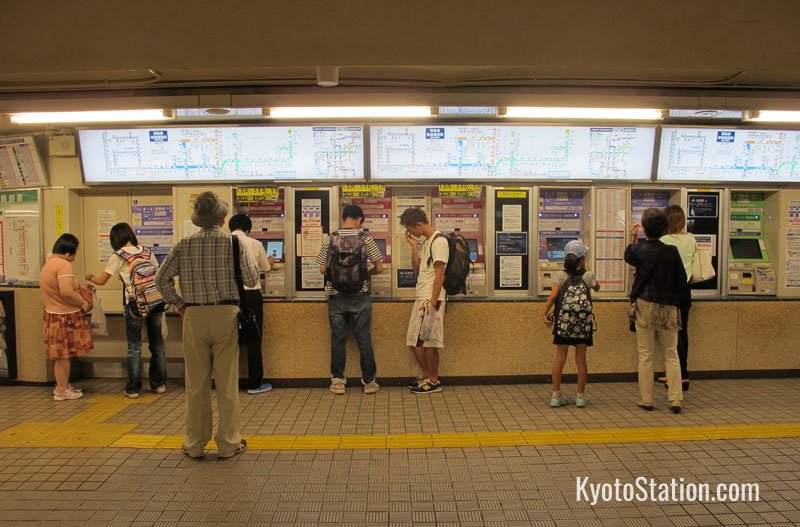
Ticket machines at Kyoto-kawaramachi Station
Traveling to Arashiyama
The Arashiyama and Sagano area is serviced by three stations: Hankyu Arashiyama Station, JR Saga-Arashiyama Station, and Keifuku Arashiyama Station. All of these stations are fairly conveniently located, so the line you take will depend on your starting point in the city. If you are coming from central Kyoto, a popular route is to take the Hankyu Line as far as Omiya Station and then transfer to the Keifuku Randen tramline. The ride, in an old fashioned trolley car, lasts 20 minutes and follows a pleasant scenic route.
Traveling to Osaka
If you are traveling from central Kyoto, you might consider taking the private Hankyu Line from Kyoto-kawaramachi or Karasuma Stations. This will get you to Osaka-umeda Station, beside JR Osaka Station, in about 40-42 minutes for 410 yen. The Hankyu Railway is not covered by the Japan Rail Pass.
The alternative route to Osaka is to travel via Kyoto Station. The Special Rapid train on the JR Kyoto Line will get you to Osaka Station in 28 minutes for a fare of 580 yen. This route is covered by the Japan Rail Pass.
Traveling to Kobe
If you are traveling from central Kyoto, you might consider taking the private Hankyu Line from Kyoto-kawaramachi or Karasuma Stations. This will get you to Kobe-sannomiya Station in about 65-70 minutes, with a transfer at Juso Station. The service is slower than taking the JR Kyoto Line, but cheaper at 640 yen. It may also be more convenient if you are starting from central Kyoto rather than Kyoto Station. Remember that the Hankyu Railway is not covered by the Japan Rail Pass.
The alternative route to Kobe is to travel on JR trains via Kyoto Station. The Special Rapid train on the JR Kyoto Line will get you to Sannomiya Station in Kobe in 51 minutes for a fare of 1,110 yen. If you have a Japan Rail Pass, you can take a high speed shinkansen to Shin-Kobe Station. This is much faster, but Shin-Kobe Station is not as conveniently located as Sannomiya Station.
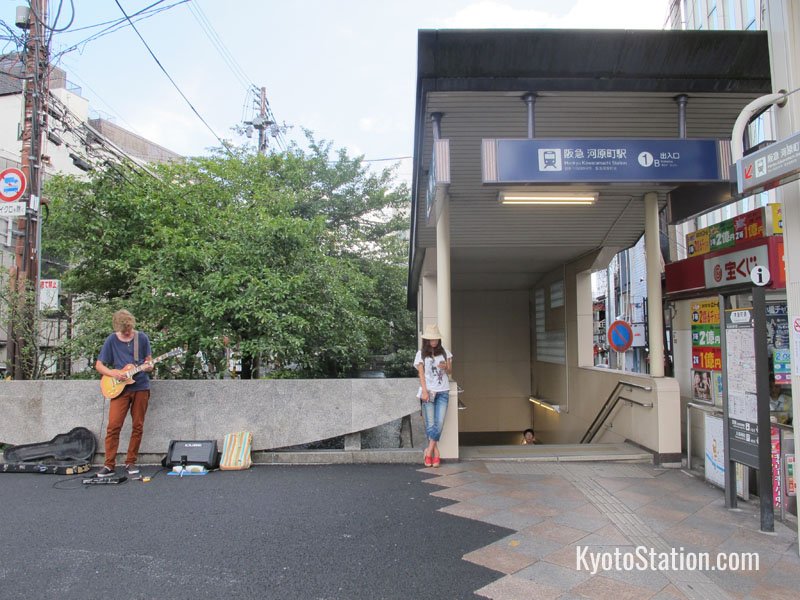
An entrance to Kyoto-kawaramachi Station on Shijo Street
Discount Tickets
As the Hankyu Railway is a private company, it is not covered by the Japan Rail Pass. Hankyu visitor ticket options include the Hankyu One-Day Pass, which covers unlimited rides on all Hankyu Railway lines for one day, and a Hankyu Kyoto Line 1-day Free Pass for eligible Kansai Area Pass users. Ticket names, prices, purchase methods and eligibility can change, so check Hankyu’s official ticket page before buying.
For wider private-railway and metro travel in Kansai, check the official KANSAI RAILWAY PASS site before buying. Its coverage and sales periods are date-limited, and it does not cover JR trains or buses.
Local residents can use PiTaPa, an IC fare card accepted by many private railways, buses and subway systems in the Kansai region. A Japanese bank account and domestic application process may be required. Other IC cards, like Suica, PASMO, and ICOCA are also accepted.
You can find timetables and station maps for the Hankyu Kyoto Main Line and Arashiyama Line on the official Hankyu Railway website, or use the Arukumachi Kyoto route search. There is also a free bilingual PDF route map which you can download from the Hankyu Railway website. The Hankyu Kyoto Main Line and the Hankyu Arashiyama Branch Line are on the far left of the map and colored green. The Kobe Main Line is colored blue. To find a suitable train quickly and easily it is best to use an English language online route finder like Jorudan or Navitime.
Article and original photos by Michael Lambe. All rights reserved. Last updated 15-Jun-2026.