The Kyoto Municipal Subway is an underground railway network with just two lines: the Karasuma Subway Line which runs north to south, and the Tozai Subway Line which runs east to west. These two lines are connected at Karasuma Oike Station. Although this subway system is quite limited, it can be used in combination with other bus and railway networks to access most areas of the city.
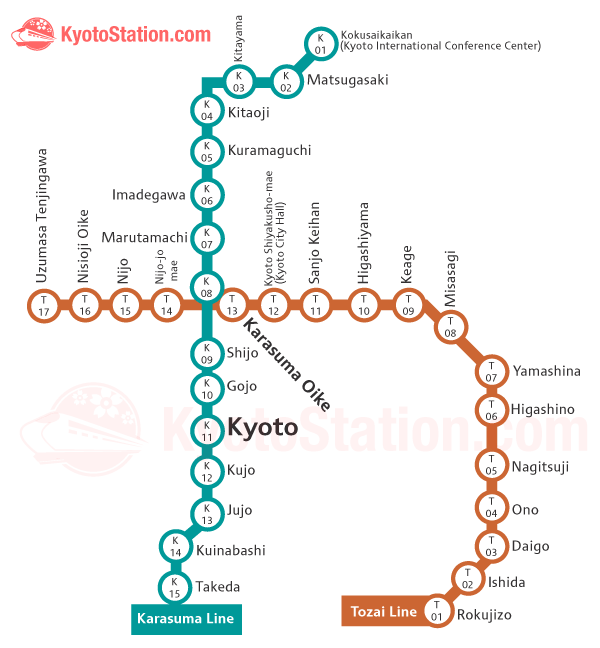
The Karasuma Subway Line runs between Kokusaikaikan Station in the north and Takeda Station in the south. Some trains continue beyond Takeda onto the Kintetsu Line, including services toward Shin-Tanabe and Kintetsu-Nara. This line is especially useful as it provides a quick connection between Kyoto Station and Kyoto’s city center at Shijo Station.
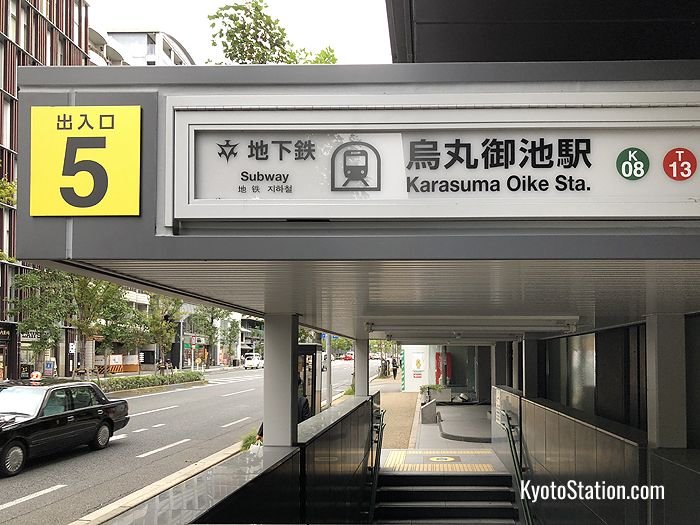
Karasuma Oike is the interchange station for Kyoto’s two subway lines
Other useful stops are Karasuma Oike Station for Kyoto International Manga Museum, Imadegawa Station for the Gosho Imperial Palace Park, Kitaoji Station for the Daitokuji Temple complex, Kitayama Station for Kyoto Botanical Garden, and Kokusaikaikan Station for Kyoto International Conference Center.
For full details of this route and its key destinations see our Karasuma Subway Line article.
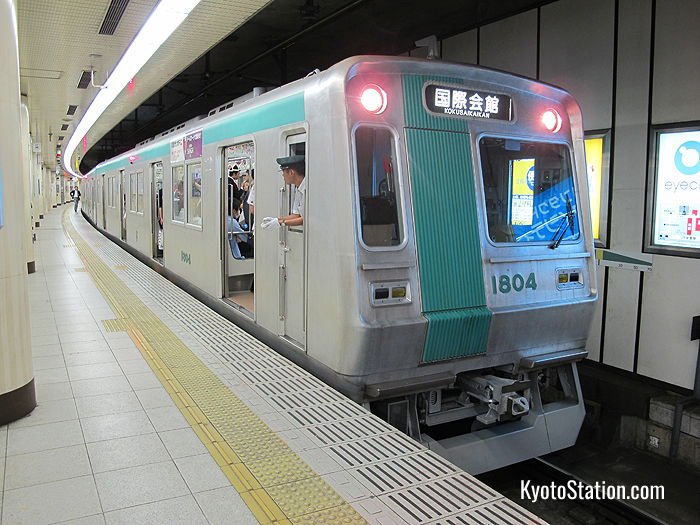
A Karasuma Subway Line train bound for Kokusaikaikan Station
The Tozai Subway Line runs between Rokujizo Station in the south-east and Uzumasa Tenjingawa Station in the west. Some Keihan Keishin Line trains also run through from Misasagi onto the Tozai Line toward Kyoto Shiyakusho-mae or Uzumasa Tenjingawa. This line is particularly convenient for traveling between the city center and destinations like the Higashiyama sightseeing district in the east or Nijo Castle in the west. Other useful stops are Daigo Station for Daigoji Temple, Keage Station for Nanzenji Temple, Sanjo Keihan Station for city center shopping and Pontocho alley, and Uzumasa Tenjingawa Station for UZUMASA KYOTO VILLAGE, also known as Toei Uzumasa Eigamura.
For full details of this route and its key destinations see our Tozai Subway Line article.
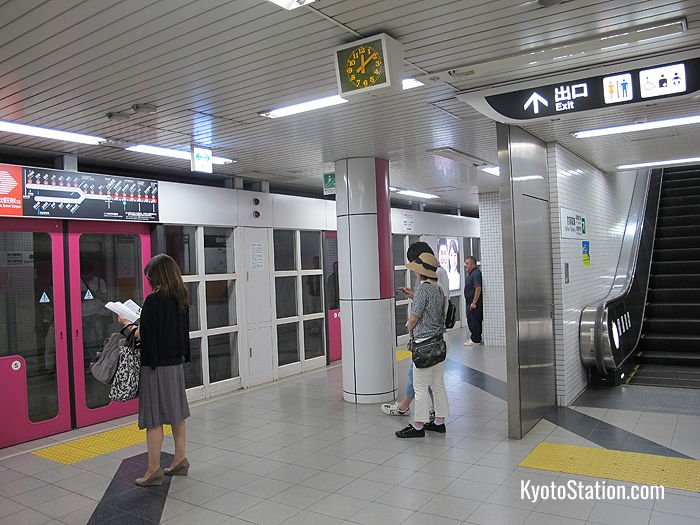
Waiting for a train at the Tozai Subway Line’s Sanjo Keihan Station
Transfers & Connections
Although the areas that are covered by the Kyoto subway system are quite limited, the two lines do connect with other railway lines at various points along their routes. The combination of these various railway services actually makes up an extensive transportation network for the city. You can use the official Kyoto City Bus & Subway route map page to see how this complete network fits together. The major transfer points are listed below.
Karasuma Subway Line Connections
Takeda Station links the Karasuma Subway Line with the Kintetsu Kyoto Line which connects Kyoto with the city of Nara. Usually you will need to transfer between these lines, but some subway trains continue beyond Takeda onto the Kintetsu Line, including services toward Shin-Tanabe and Kintetsu-Nara.
Kyoto Station is the major transportation hub of Kyoto city with outbound railway services to all parts of Japan. You can also transfer here to the JR Sagano Line for the popular Kyoto tourist destinations of Nijo and Saga-Arashiyama. Kyoto Bus Station is on the north side of Kyoto Station and here you can access bus services for all parts of the city. See our article Taking a Bus in Kyoto for full details of most Kyoto’s useful bus routes.
Shijo Station has direct underground access to the Hankyu Kyoto Main Line at Karasuma Station. The Hankyu Kyoto Main Line runs from Kyoto-Kawaramachi in the city center to the popular Kyoto tourist destinations of Katsura and Arashiyama, and beyond those it continues on to Osaka.
Karasuma Oike is the transfer point between the Karasuma Subway Line and the Tozai Subway Line.
Tozai Subway Line Connections
Rokujizo Station is the transfer point for the JR Nara Line and Keihan Uji Line. The Keihan Uji Line runs to Uji, a small city on the outskirts of Kyoto which is best known for its two UNESCO World Heritage Sites: the Byodoin Temple and Ujigami-jinja Shrine.
Sanjo Keihan Station is the transfer point for the Keihan Main Line. This line is particularly useful as it runs north to south through the center of the city and provides access to many of Kyoto’s major tourist locations.
Nijo Station is another transfer point for the JR Sagano Line that runs between Kyoto Station and JR Saga-Arashiyama Station.
Uzumasa Tenjingawa Station is the transfer point for the Keifuku Randen Tram Line. This is Kyoto’s last operating tramline and it runs to destinations in the Arashiyama district and to Kinkakuji Temple (the Golden Pavilion).
Discount Passes
Kyoto Municipal Transportation Bureau runs both the Kyoto Municipal Subway and Kyoto City Bus network. Because of this, day passes are available, some of which cover both subway and city bus rides.
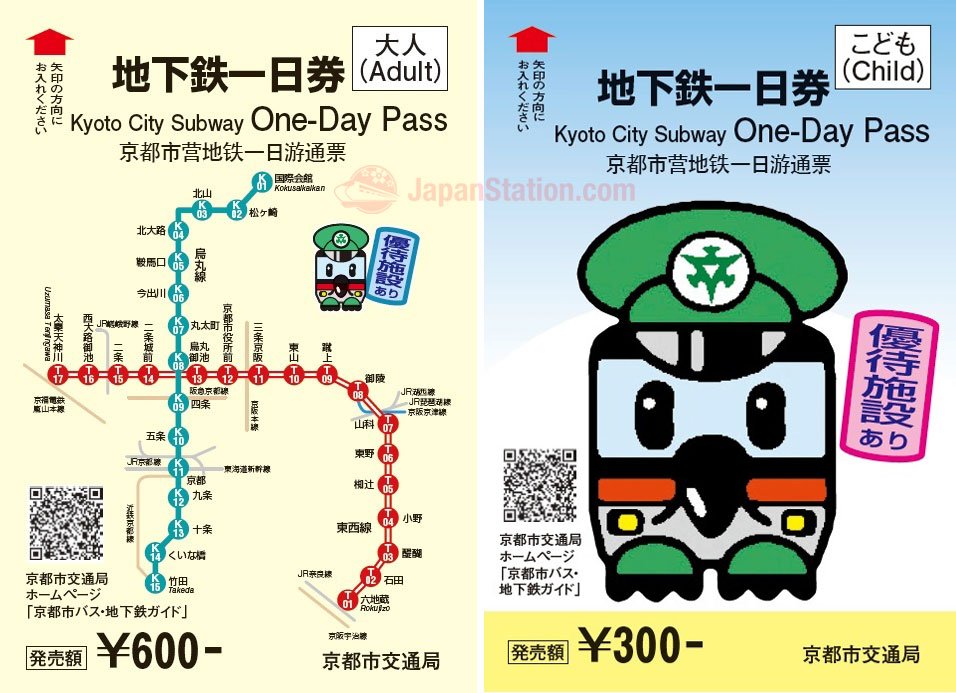
Kyoto Municipal Subway One-day Passes for adults and children
The Kyoto City Subway 1-Day Pass gives unlimited travel on the Karasuma and Tozai subway lines. It is priced at 800 yen for adults and 400 yen for children. This pass includes discounts for entry to a number of popular tourist locations. You can buy this pass at subway station ticket offices and vending machines and also from the Kyoto City Bus and Subway Information Center by Kyoto Station’s subway entrance.
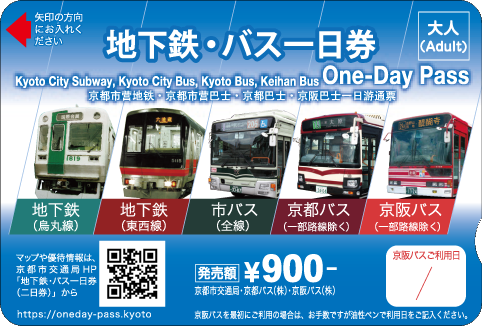
Subway & Bus One-Day Pass
The Subway & Bus 1-Day Pass gives unlimited travel on all Kyoto Municipal Subway lines, all Kyoto City Bus routes, and specified Kyoto Bus, Keihan Bus, and West Japan JR Bus routes. This pass includes discounts for entry to a number of popular tourist locations. The Subway & Bus 1-Day Pass is priced at 1,100 yen for adults and 550 yen for children. This pass is available from subway station ticket offices, from Kyoto Bus Information Center which is outside the north gate of Kyoto Station, and from the Kyoto City Bus and Subway Information Center by Kyoto Station’s subway entrance.
Surutto Kansai’s KANSAI RAILWAY PASS is offered during set sales periods for overseas visitors. It covers metro and private railway travel across Kansai, but does not cover JR trains or buses, so check the official KANSAI RAILWAY PASS website before planning around it.
The Japan Rail Pass is only valid for JR railway lines and for shinkansen services, so it does not cover the Kyoto Municipal Subway. When transferring between the subway and JR lines you will need to buy separate tickets.
IC Cards
IC cards are prepaid cards which can be used to travel on trains and buses. The local IC card for the Kansai region of West Japan is called ICOCA, but major cards from different regions, including Suica, PASMO, PiTaPa and other compatible nationwide cards, can be used interchangeably across the country. These IC cards can be used instead of cash on both the Kyoto Municipal Subway and Kyoto City Bus networks, saving you the time of buying a ticket. For more information on Japan’s major IC cards and how to use them see our IC Cards article.
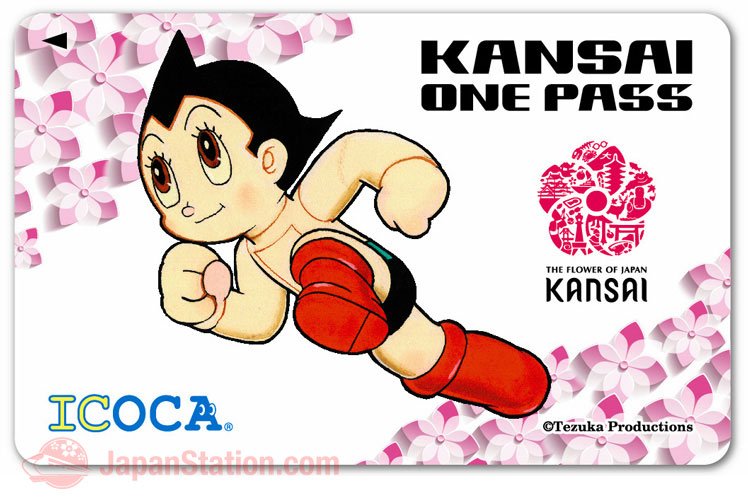
The Kansai One Pass
A special IC card for short-term overseas visitors to the Kansai region is also available which is called the Kansai One Pass. The Kansai One Pass can be used as an IC card on major Kansai train and bus networks, and it includes special discounts at participating sightseeing spots. Eligible visitors may be able to buy it at Kyoto City Bus & Subway Information Centers. For more details visit the Kansai One Pass website.
Useful Links
For route maps, use the official Kyoto City Bus & Subway route map page, which links to subway, bus and sightseeing route maps. Subway line information, station maps, timetables and fares are available from the official Kyoto City Bus & Subway subway guide. To find train and transfer times quickly and easily it is best to use an English language online route finder like the KYOTO Transit Planner, Japan Transit Planner or Navitime.
Article and original photos by Michael Lambe. All rights reserved. Last updated 20-Jun-2026.